
Notes on buying, pricing and naming with domains
Practical, hands-on writing for founders and developers — and a portfolio of 154 exact-match, brandable and geo names behind it.
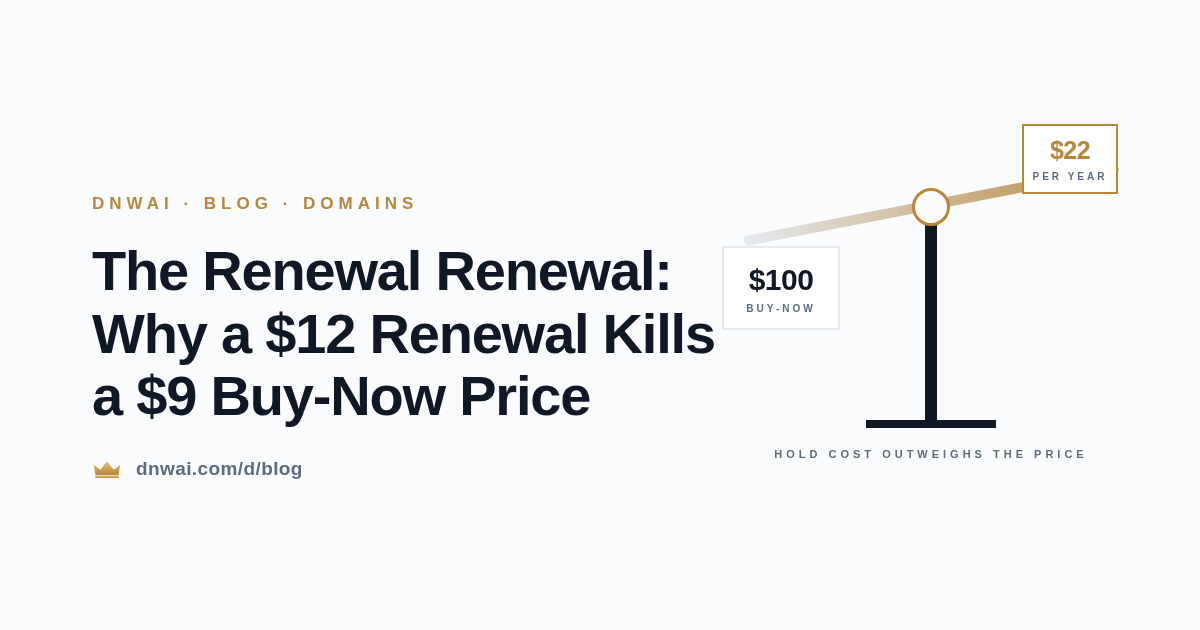
The Renewal Renewal: Why a $12 Renewal Kills a $9 Buy-Now Price
Eight of the 181 names in our ledger carry a $100 buy-now price while the renewal on the same name is a real bill. How the renewal compares with the cheapest BIN we will actually publish, the 35 names expiring this month, and the four-second arithmetic that decides whether a name stays listed.
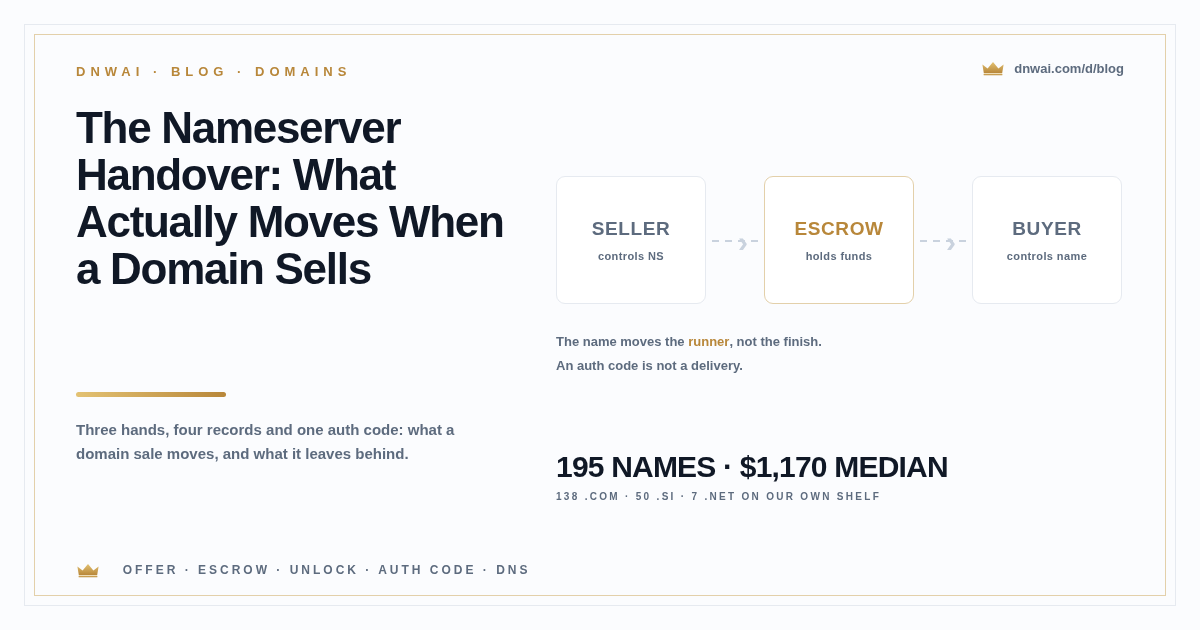
The Nameserver Handover: What Actually Moves When a Domain Sells
A domain changes hands three times in one sale: runner to escrow to buyer, with the nameservers deciding whether the deal lands. The four handover mistakes that stall a funded sale, why an auth code is not a delivery, and the four lines we now put in writing before any transfer.
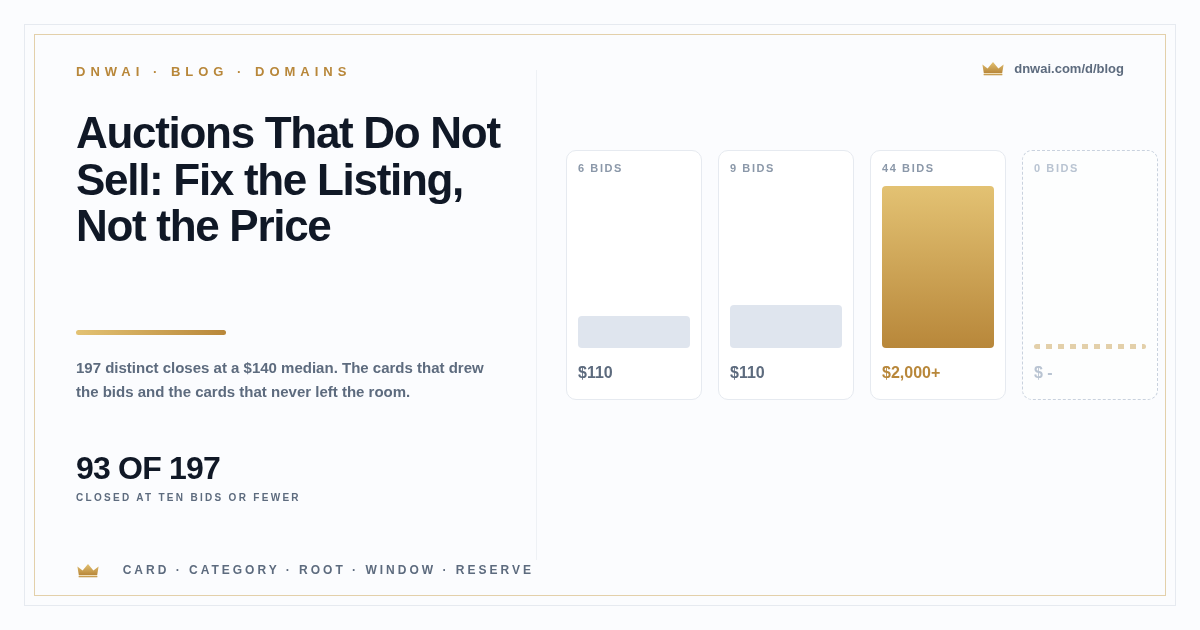
Auctions That Do Not Sell: Fix the Listing, Not the Price
197 distinct .si closes with a $140 median, split at the bid count: 93 cards drew ten bids or fewer at $110 while five drew forty or more above $2,000. The four things we change before touching the price, the reserve setting that decides whether a sale record exists at all, and the relist calendar we run on a stalled card.
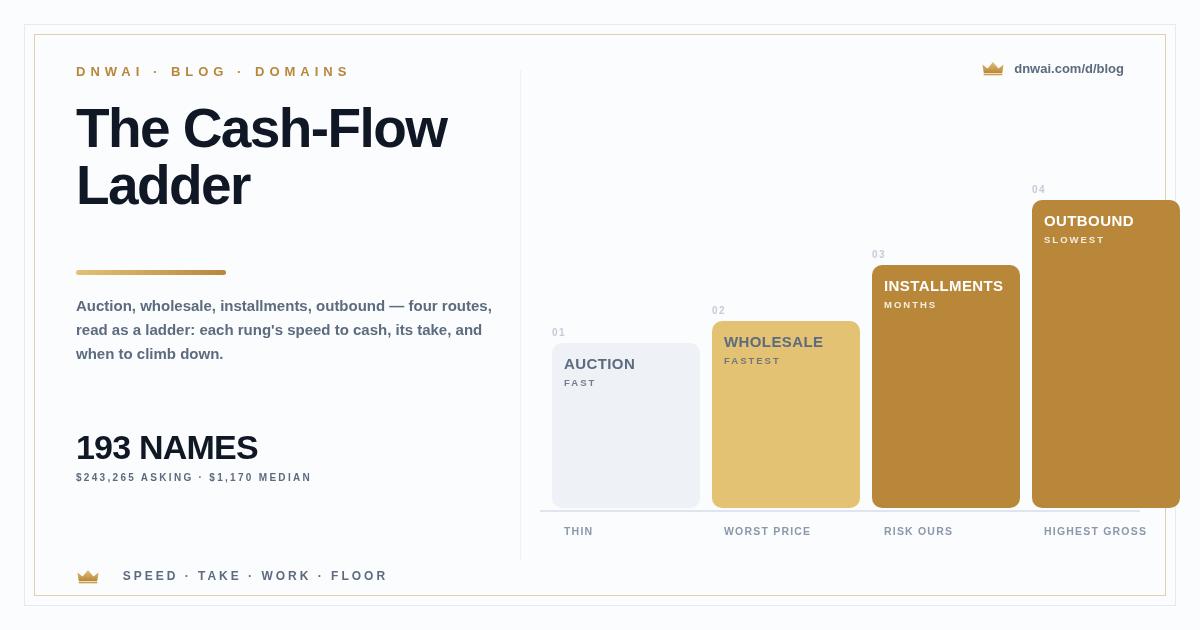
The Cash-Flow Ladder: Auction, Wholesale, AtomPay, Outbound
Four routes sell a domain — auction, wholesale, installments, outbound. Read as a ladder: what each rung charges in time and take, the tier of a 193-name shelf it belongs to, and the calendar rule for climbing down.
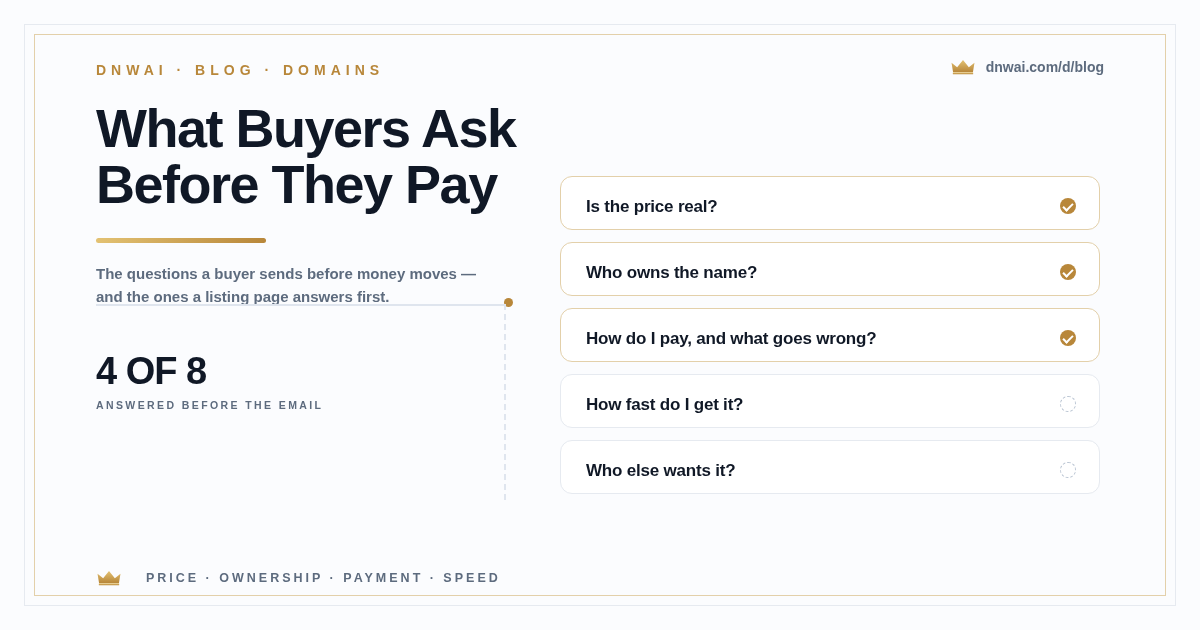
What Buyers Ask Before They Pay
Every thread that came back from 2,097 outbound emails, read for the questions: the eight a domain buyer asks before money moves, what each one is really testing, and the answers a listing page can give before the email is ever sent.
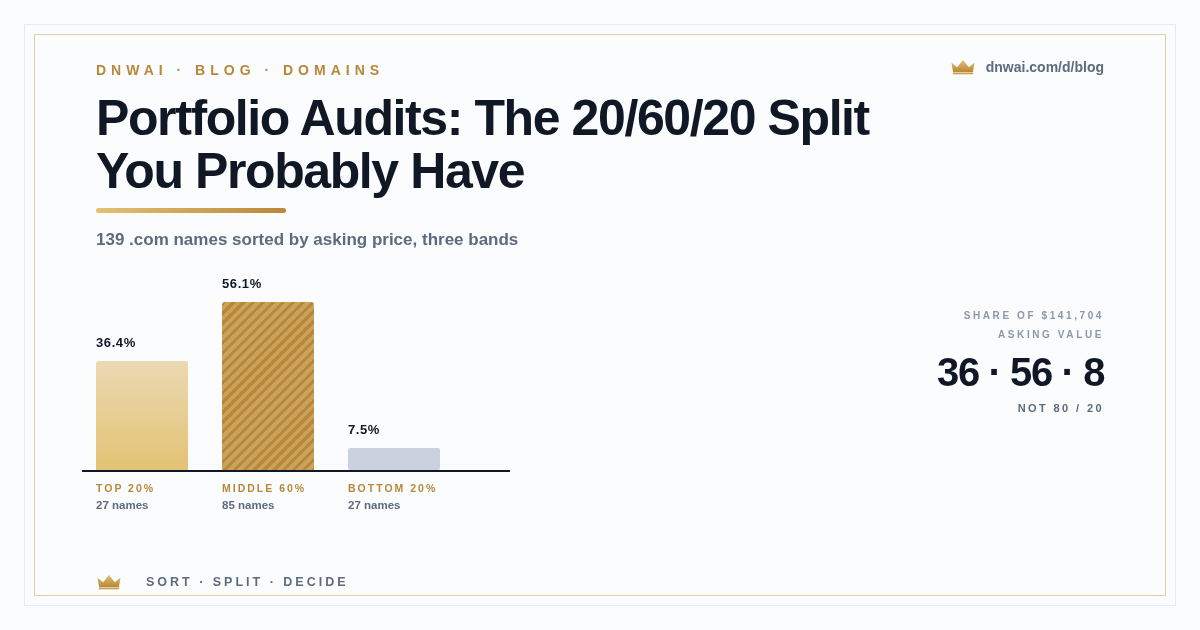
Portfolio Audits: The 20/60/20 Split You Probably Have
We sorted the 139 .com names on our own shelf by asking price: 27 names carry 36.4% of the money, 85 carry 56.1%, and 27 carry 7.5% with a $375 median. How to build the bands, what each one is for, and the four decisions that follow.
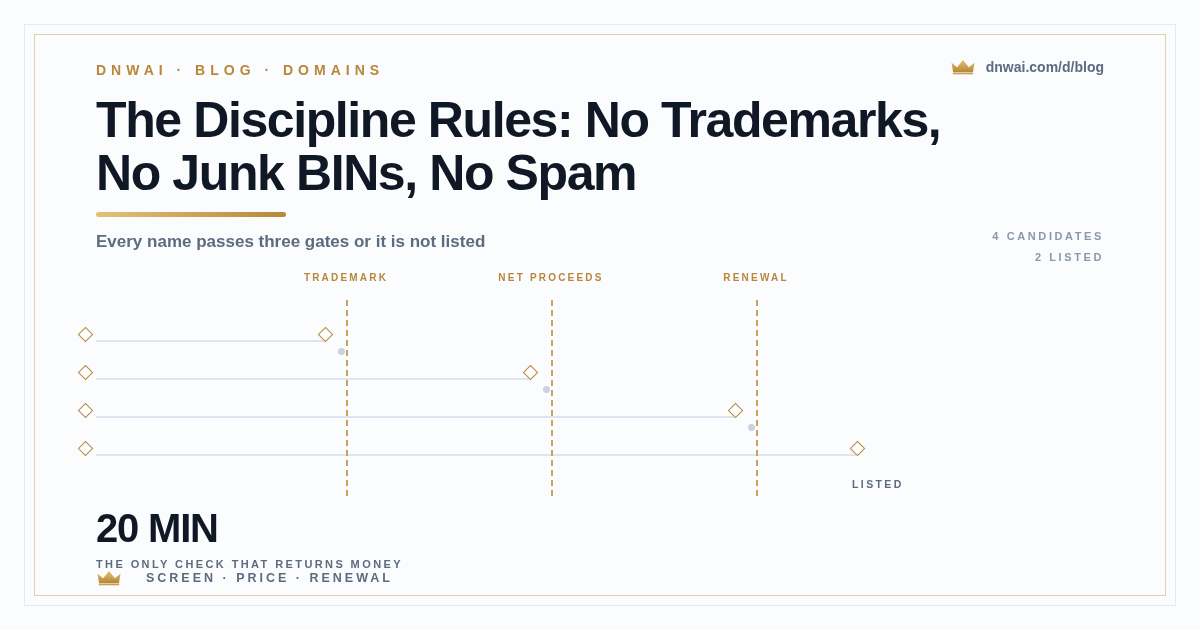
The Discipline Rules: No Trademarks, No Junk BINs, No Spam
Three of our own listings read line by line before they went public: the trademark screen that stopped two names, the commission tiers that decide what a buy-now actually nets, and the renewal arithmetic that makes a cheap BIN expensive.
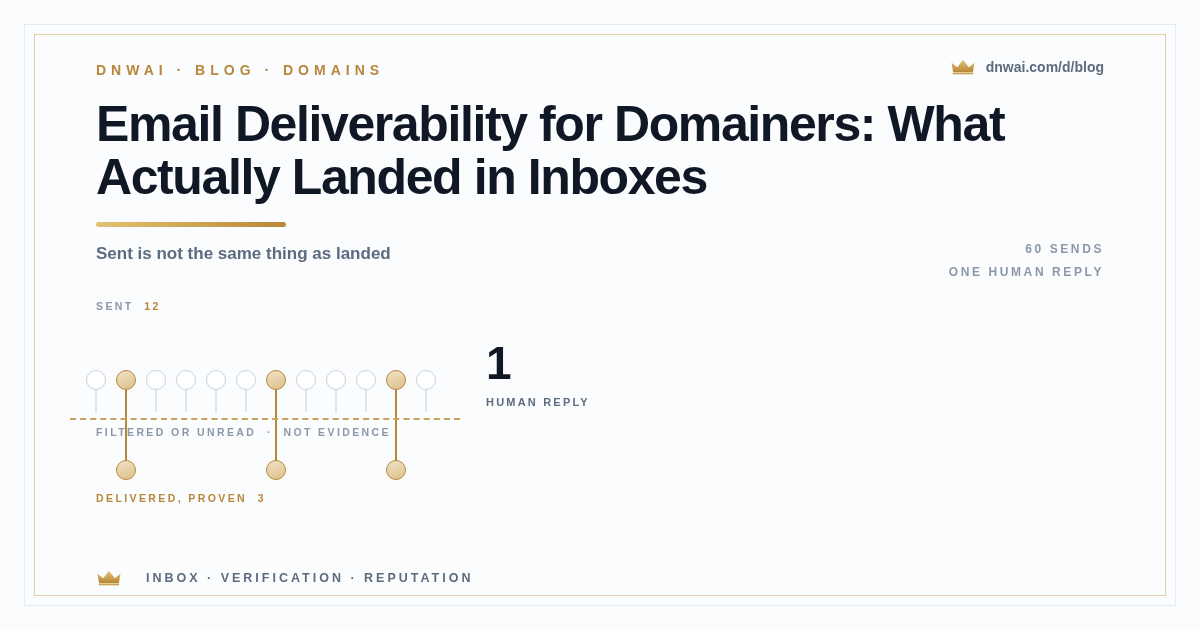
Email Deliverability for Domainers: What Actually Landed in Inboxes
Sixty property managers in Perth, one mailbox, four touches of a $199 domain offer: what the campaign data shows about landed mail versus sent mail, why an email verifier that answers 429 is not a clean list, and the four readings we trust more than any inbox screenshot.
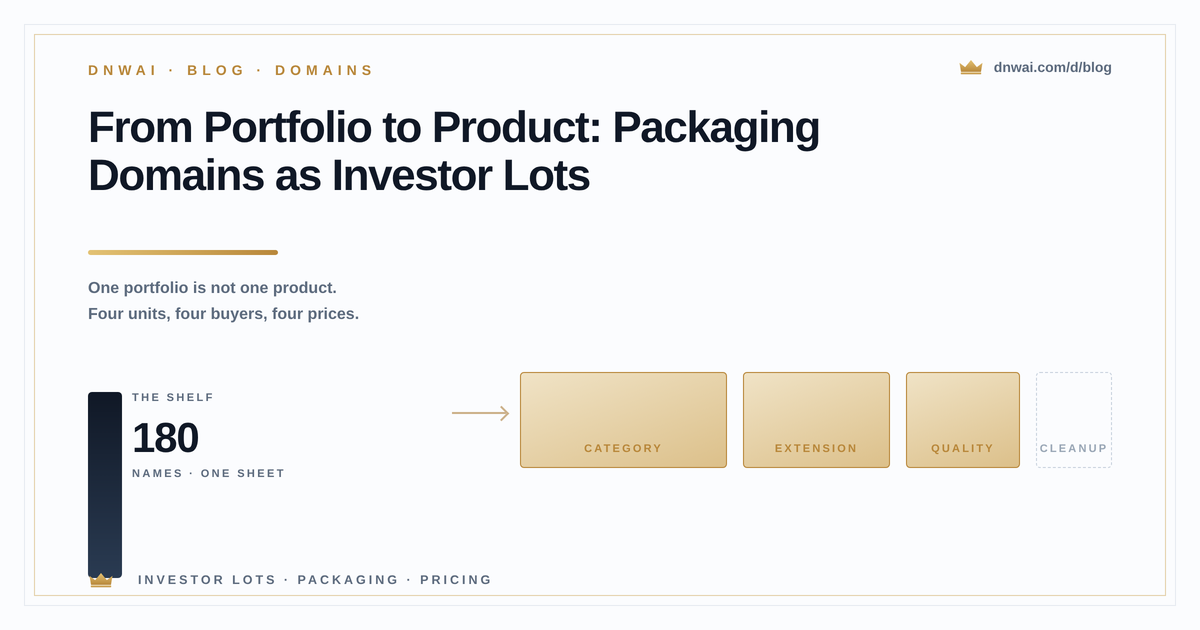
From Portfolio to Product: Packaging Domains as Investor Lots
Selling forty names one at a time is forty negotiations; selling them as four lots is four products with a price, a story and a buyer profile. How to build the units, what a lot buyer actually evaluates, the document pack that removes his fear, and the lots we will not assemble.
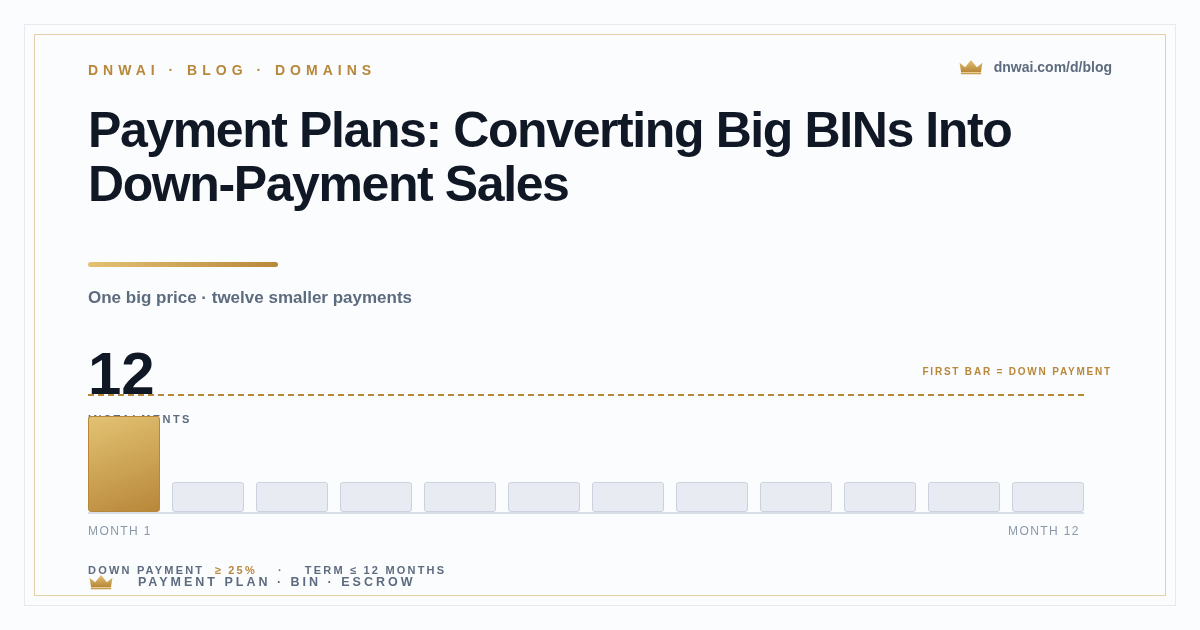
Payment Plans: Converting Big BINs Into Down-Payment Sales
A $3,000 buy-now price is a wall for a buyer with a launch budget of $900. Instalment terms convert that wall into a funded escrow: the three numbers a plan is built from, what the commissions and escrow fees do to a split payment, and the terms we refuse to offer.
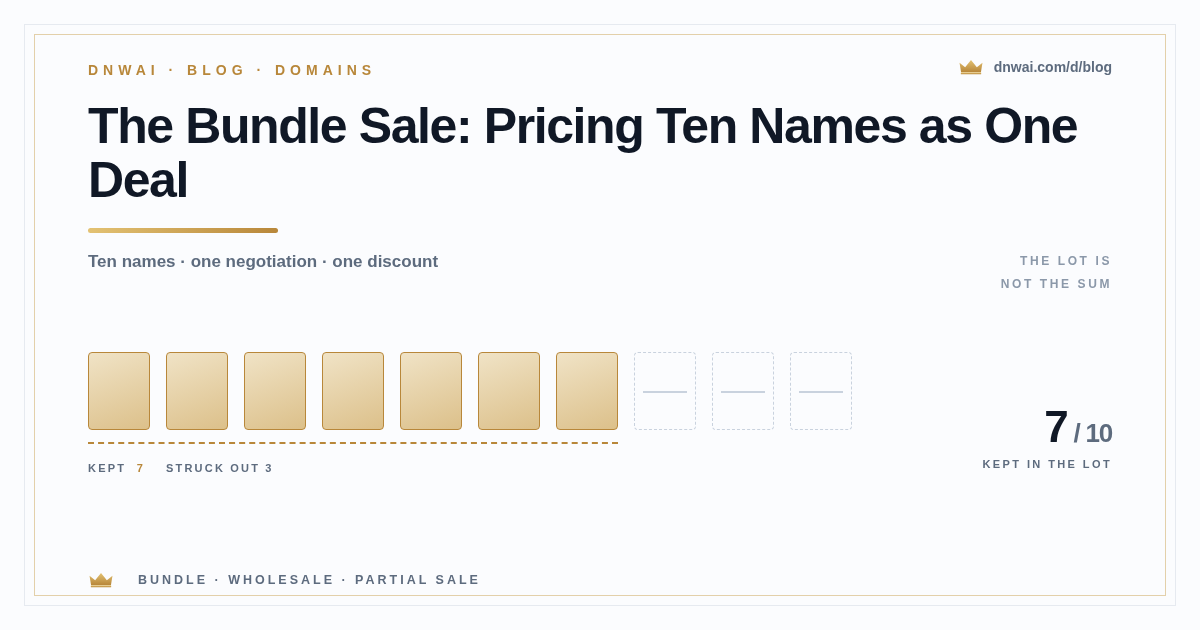
The Bundle Sale: Pricing Ten Names as One Deal
Bundling slow names into one investor lot looks like a tidy exit and is usually a discount with extra steps. How to price a lot against the sum of its parts, what the buyer actually subtracts before he bids, and when to break the package back into single names.
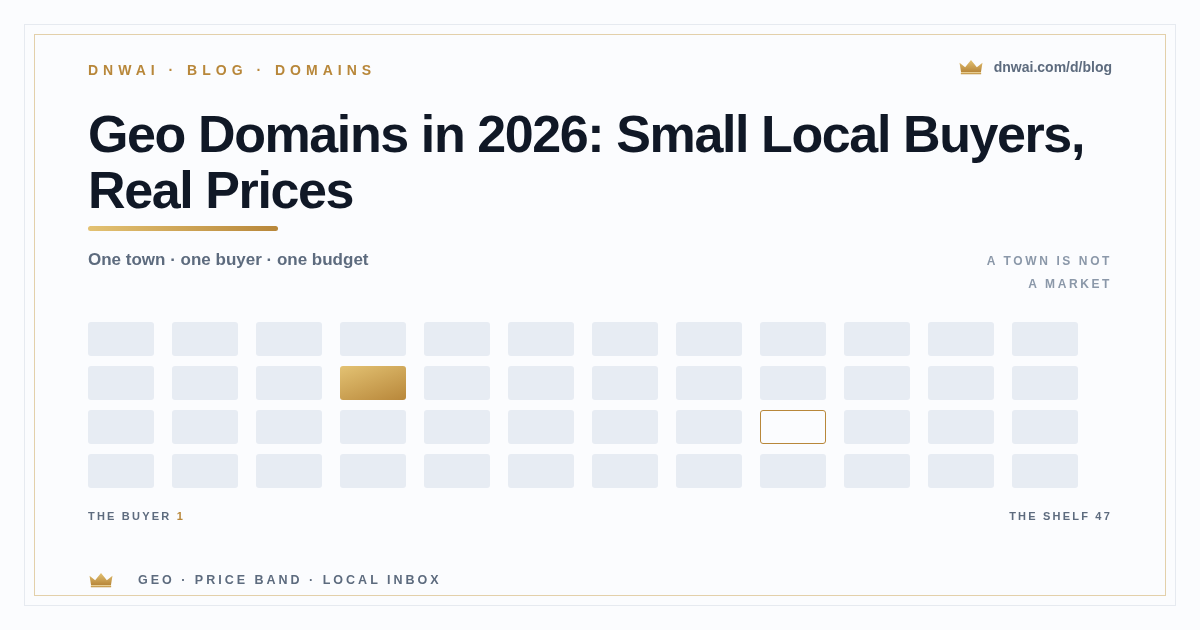
Geo Domains in 2026: Small Local Buyers, Real Prices
A city name plus a service is the most misunderstood inventory in this business: local buyers want it, rarely browse marketplaces, and never pay domainer prices. Who actually buys geo names, the price band that survives a buyer's own budget, and why a small fast close beats a large listing that funds nothing.
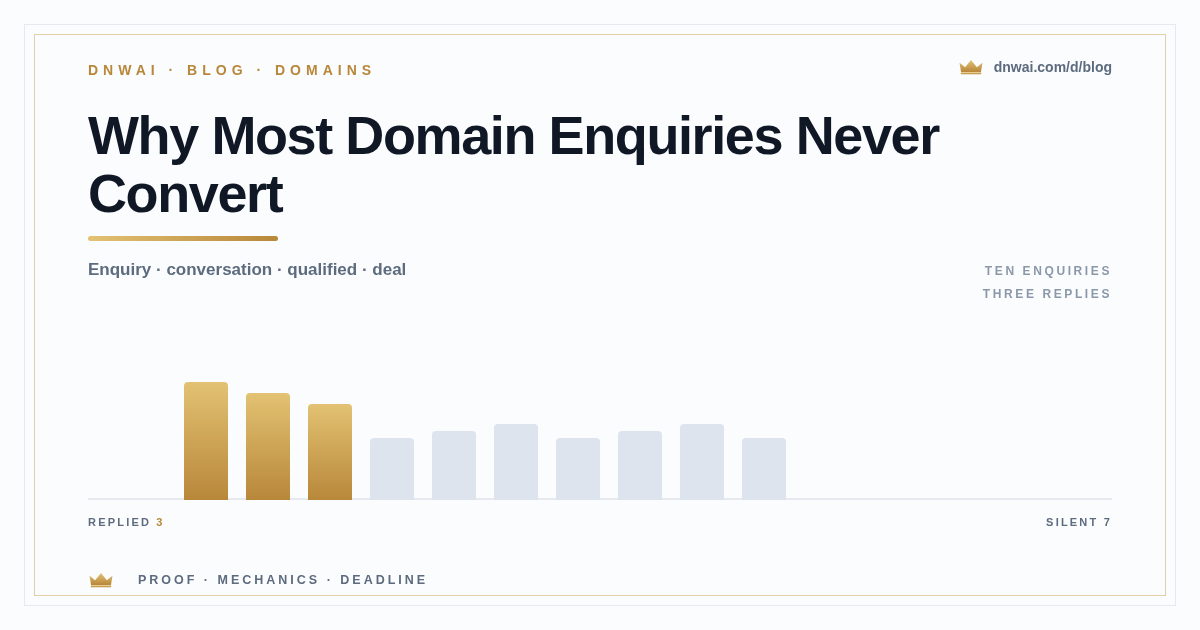
Why Most Domain Enquiries Never Convert
An enquiry is not a buyer, and most of them die inside a silent inbox. The three-message sequence we now use, a twenty-minute proof pack, and the reason a deadline does more work than a discount.
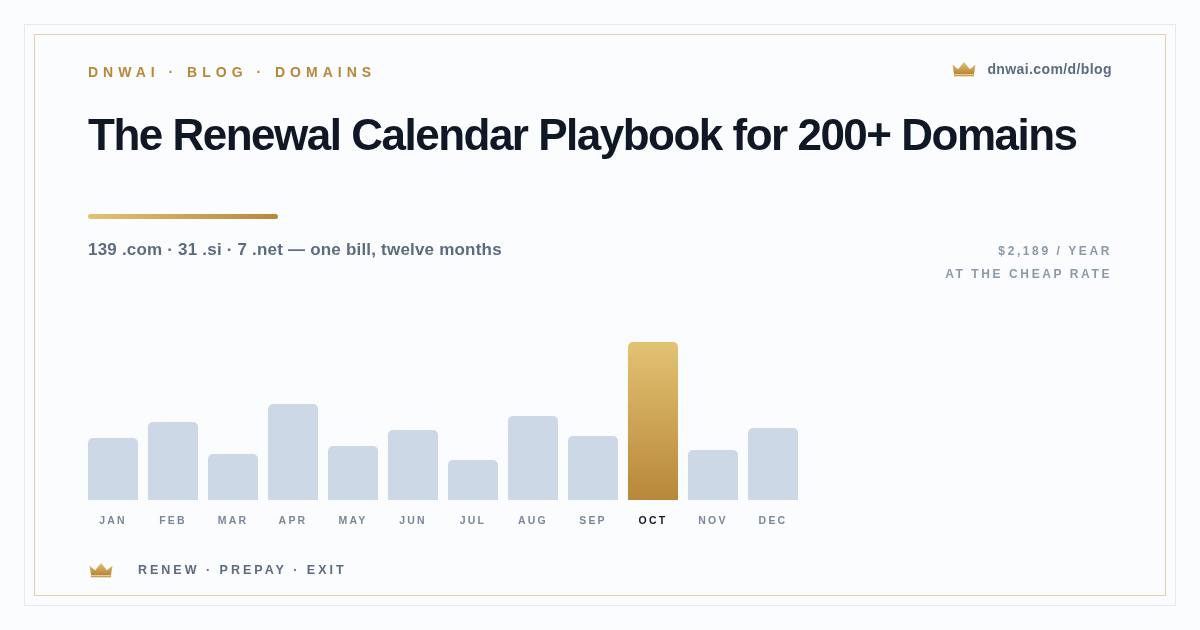
The Renewal Calendar Playbook for 200+ Domains
139 .com at a $12–22 renewal, 31 .si at €12 and a $495 median ask: the twelve-month calendar that turns a single invoice into a monthly bill, the 60-day window where a name is still yours to lose, and the arithmetic that decides which names to prepay.
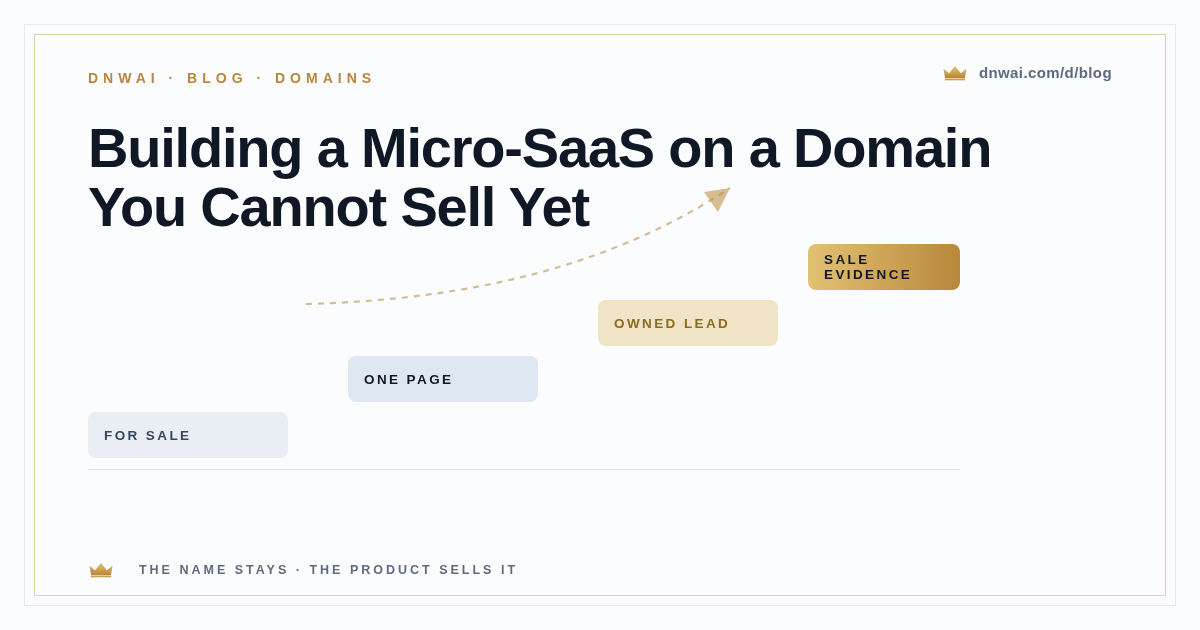
Building a Micro-SaaS on a Domain You Cannot Sell Yet
A $1,795 name with a $1,199 appraisal and months of silence: the four questions that decide which name earns a product, the one-screen build that produces an owned lead, and what a live site actually changes — including the 1.35–4.5% checkout maths.
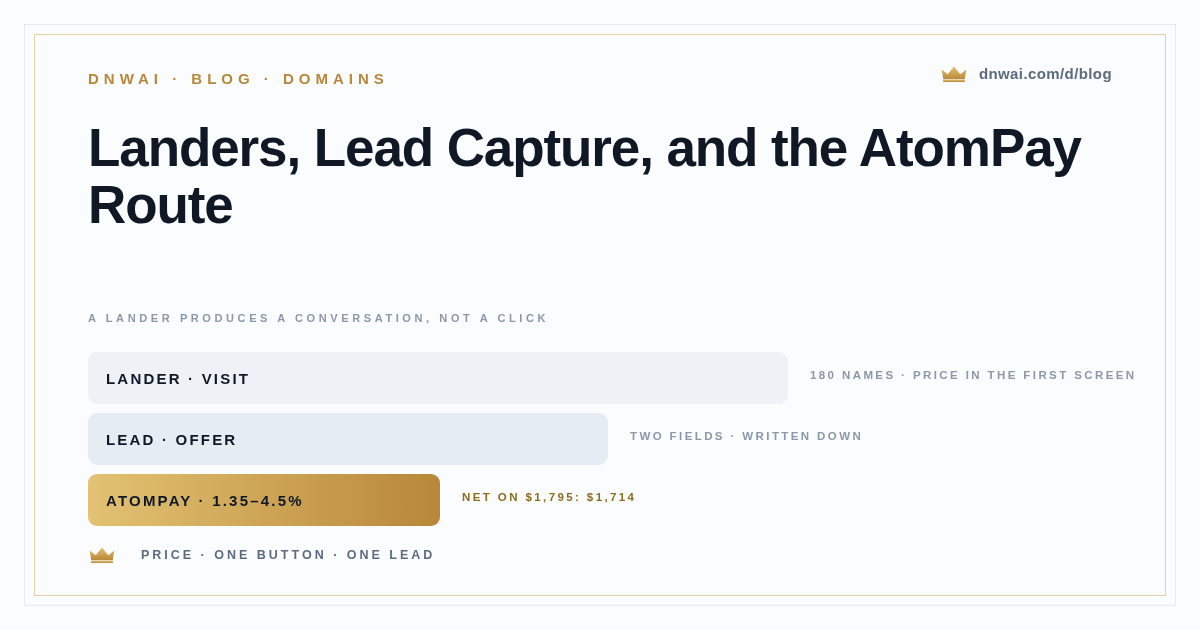
Landers, Lead Capture, and the AtomPay Route
Three lander types, four traffic sources and the 1.35–4.5% checkout that changes the arithmetic: what a domain lander must do in eight seconds, why the lead matters more than the click, and the net proceeds on a $488 and a $1,795 name.
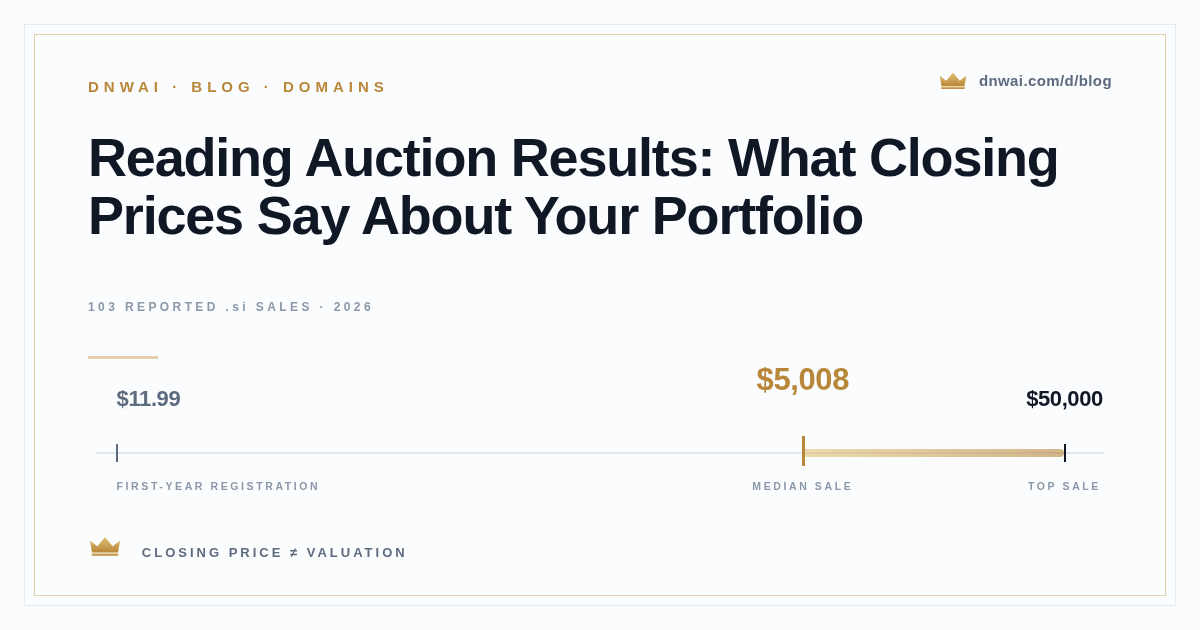
Reading Auction Results: What Closing Prices Say About Your Portfolio
A $50,000 .si close, a $5,008 median and our own $488 shelf: how we read an auction result before it touches a price — three passes, net proceeds, the realization ratio and the 90-day rule we apply to 177 priced names.
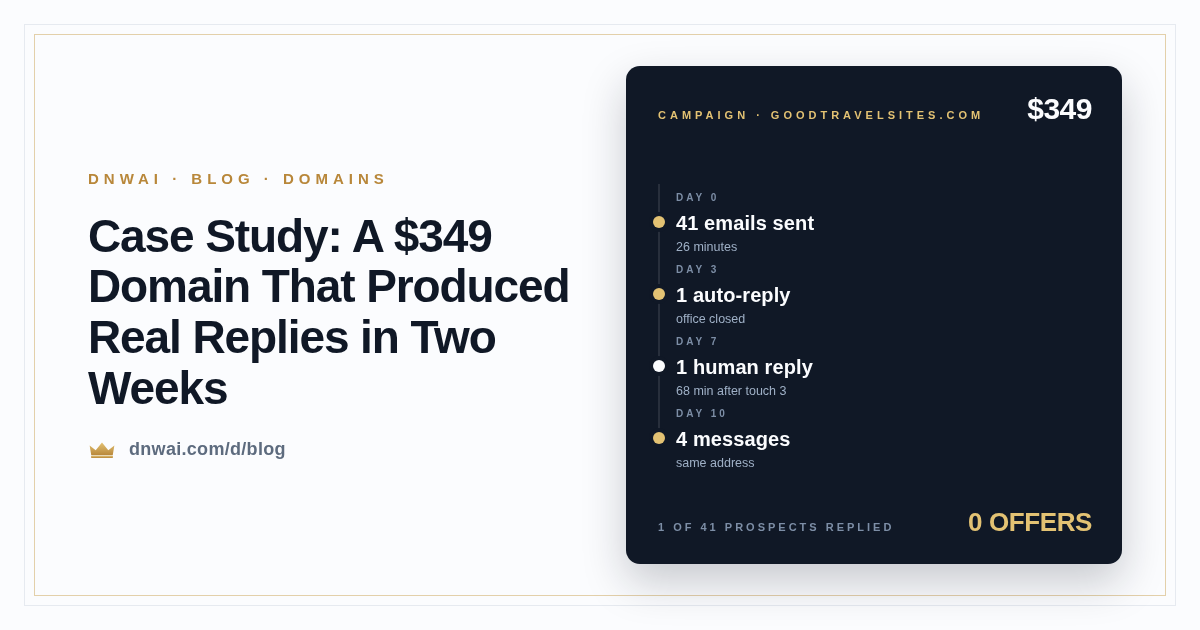
Case Study: A $349 Domain That Produced Real Replies in Two Weeks
A $349 .com, 41 cold emails, 33 contact forms and four touches across twelve days. One travel publisher replied four times inside two weeks — and every message was selling us guest posts. The campaign numbers, the messages in order, and why a real reply is not a buying signal.
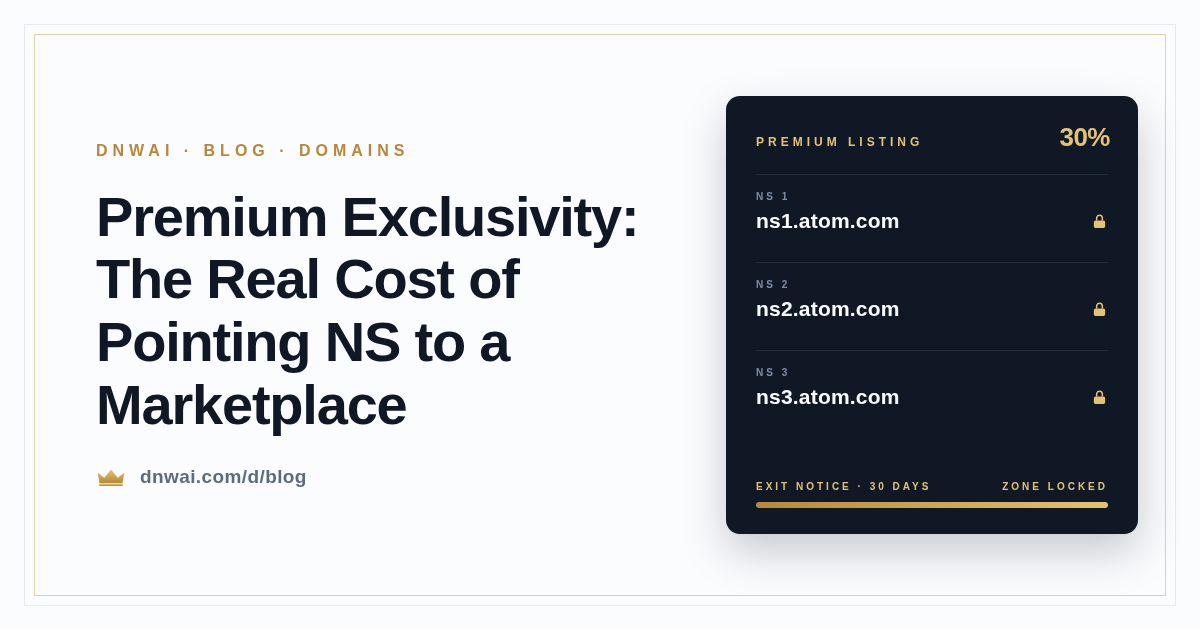
Premium Exclusivity: The Real Cost of Pointing NS to a Marketplace
Atom's Premium tier asks for your nameservers, a 30-day exit notice and a commission that runs to 30% — on our 180-name shelf that is $28,903 against a 7.5% Standard listing. The published rules, the break-even price a Premium sale has to reach, and the five costs that are not on the fee page.
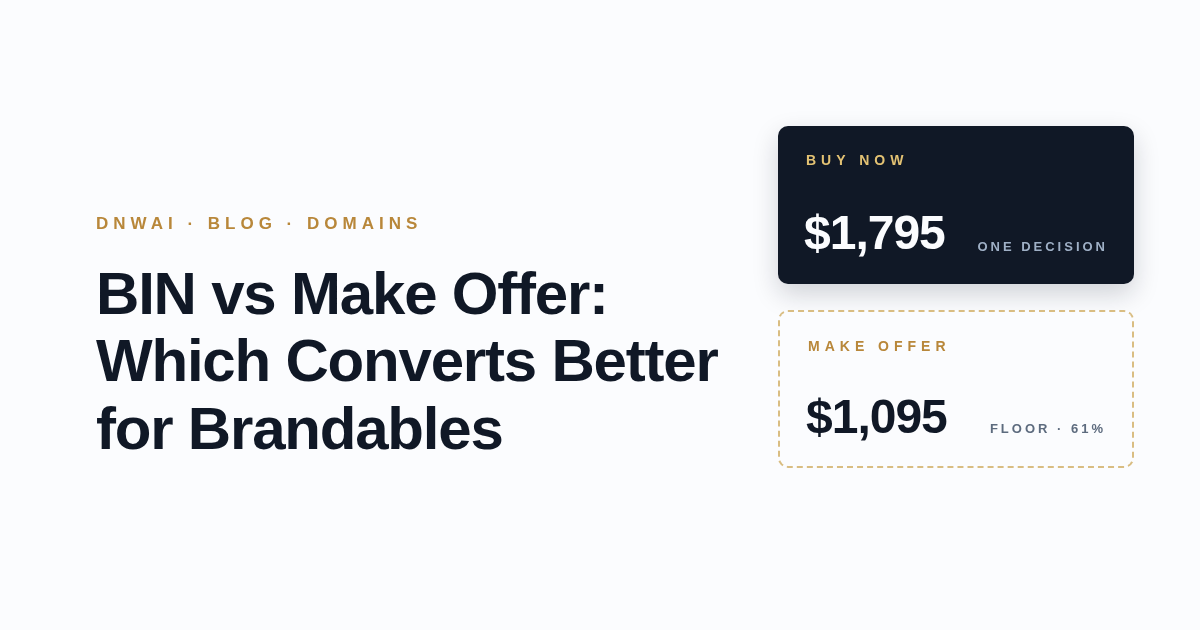
BIN vs Make Offer: Which Converts Better for Brandables
Every name on our shelf carries a buy-now price, and the pricing sheet we built on 10 October put the make-offer floor at a median 61% of that price. Which setting converts a brandable, what a public floor does to the first number, and the three listing settings we run.
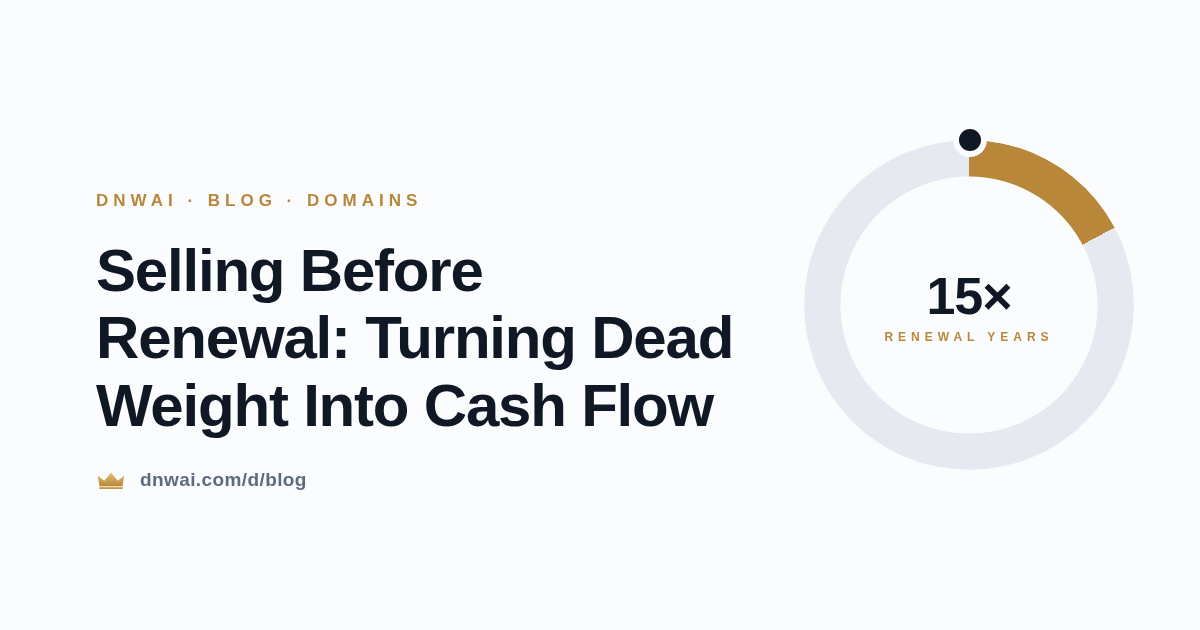
Selling Before Renewal: Turning Dead Weight Into Cash Flow
Our 177 priced names carry a median ask of $488 and a renewal bill near $2,124 a year at the cheap end. The arithmetic of a name that has to sell once every fifteen years to pay for itself, the four exits we run 90 days before the invoice, and the portfolio numbers behind them.
Cold Outreach Without Getting Blacklisted
Authentication, volume ramps, spam traps and the 0.3% complaint ceiling: the rules we run on our own sending domain so a cold email about a $199 name still reaches an inbox — and why a burned sending domain is a damaged asset.
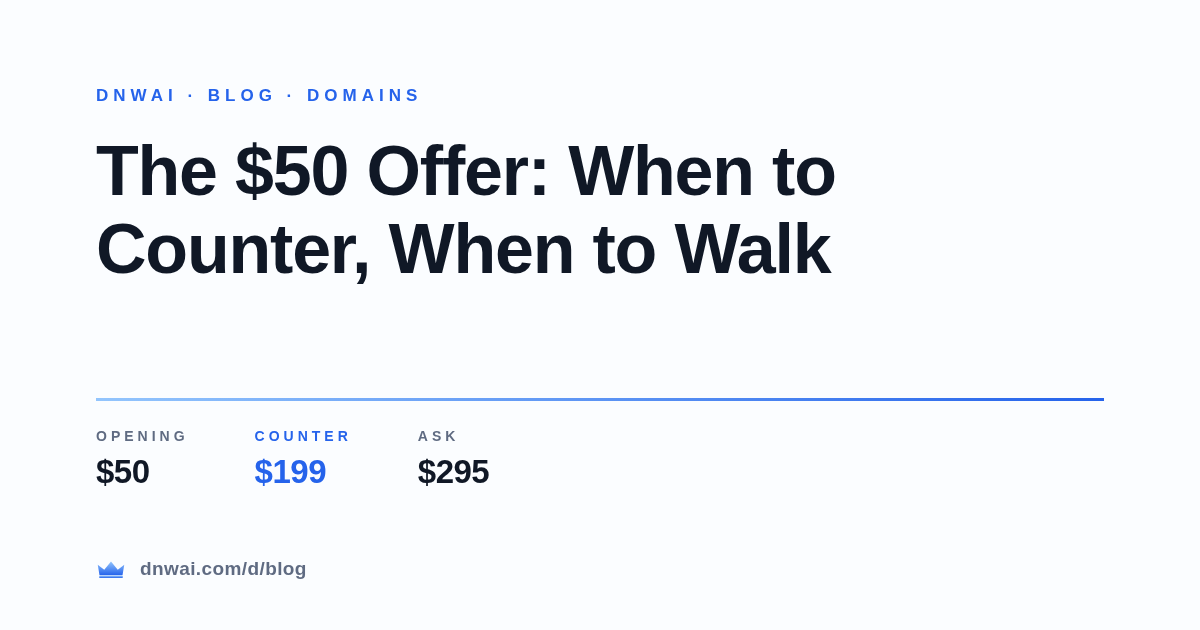
The $50 Offer: When to Counter, When to Walk
A $50 bid against a $295 ask is a decision point, not an insult. The net-proceeds arithmetic behind our $199 counter, why the midpoint is the worst number to send, why 72 hours is the deadline, and the four cases where we close the thread instead of negotiating.
Root Words and Listing Scores: How Marketplace AI Ranks Your Names
Five of our own listings read field by field: ShopUna.com indexes a root word called "Shopu", ImageFixerAI.com indexes Image and Fixer but drops the AI, and Chauffeurs.si indexes one French word. What 164 live names say about root-word overlap, why a listing score is a placement readout rather than a valuation, and the five checks we run before touching a price.
Why AI Appraisals Disagree With Your Asking Price
Four of our own names appraised twice and priced a third way: Chauffeurs.si at $199 against a $1,650 mid, GetLogo.si at $1,795 against $7,320, and the thirteen .com names where the median ask was $375 and the median appraisal $1,999. What a comparable set, an extension and a commission ladder each do to the number, and the five steps we use to reconcile them.
Wholesale Marketplace Arbitrage: Buy Low, Sell at Retail
What a wholesale price actually costs and what a retail price actually nets: Atom's 5% wholesale and 7.5% portfolio commissions against its 7.5-to-30% retail ladder, $50 no-reserve liquidation auctions that fall to $10, Escrow.com's $50 floor, and the maximum-bid formula we run before buying.
What .si domains actually sell for, and the five checks I run before buying one
297 tracked .si sales, a $2,678 median, and the checks that decide whether a Slovenian name is worth the renewal — including the free way to check comparables and availability.
The .si Auction Event: What Bidders Actually Paid
A $50,000 headline sitting 4,170 times above a $11.99 registration: the .si market's 103 reported sales in 2026, a $5,008 median, the twelve names that set the ceiling, the venues they cleared on, and the 89,938 registrations that were the real event.
Atom vs Afternic vs Sedo: Net Proceeds After Commissions
What each marketplace actually takes: Atom's 7.5 / 15 / 30-to-15% ladder plus its 1.35-4.5% AtomPay rate, Afternic's 30 / 25 / 20 / 15% grid and its $15 floor, and Sedo's 10 / 15 / 20% split - run through three sale prices, with the settings that decide which rate you pay.
No Reserve vs Reserve: The Math of Atom Auctions
A reserve auction sells at your floor or not at all; a no-reserve auction always sells, at a price you do not pick. The arithmetic behind Atom's published auction rules — the 150% BIN cap, bid increments, proxy bidding, the 72-hour payment window and the 10% commission.
What 100 Cold Outreach Replies Actually Look Like (2026 Data)
Every reply our domain outreach received in 2026, read by hand: 100 messages scanned, 57 real inbox traffic after removing marketing mail, 23 threaded “Re:” lines, and exactly two from a human. The breakdown, the automation, and what we changed.
How to close a domain sale safely: escrow, the transfer, and getting paid
A yes is not a sale. Here is the five-step escrow flow that actually gets you paid, the 60-day transfer rule that decides whether delivery takes ten minutes or a week, what escrow costs at each price band, and the red flags that mean walk away.
How to find a buyer for a domain: the businesses already using the name
A domain rarely sells because it is listed. It sells because someone is already renting the name. Here are the five searches that find those operators, the four-line email that gets a reply, and the three mistakes that kill it.
Building a domain landing page that actually converts
The eight blocks every domain for-sale page needs, the single-name copy template, where the price goes, the page-weight budget, and the five things that quietly kill conversion on a parked name.
How to appraise a domain before you buy it: a 20-minute worksheet
A five-line appraisal worksheet for domain buyers: label length, the radio test, category demand, TLD fit and history — plus the scaling that turns a score into a defensible offer, and the four checks that kill a deal.
BIN pricing and the follow-up strategy that closes domain sales
How buy-now numbers are set across a 154-name portfolio, the three-number ladder behind every listing, the four-message follow-up sequence that turns an offer into a funded escrow, and what to do when a BIN sits for ninety days.
What is my domain worth? The 7 fields that turn a guess into a number
A seven-field appraisal template for domain owners: comparable sales, scarcity, buyer count, renewal drag, history and trademark risk — then how to turn the fields into a wholesale floor, a retail ask, and a price you can publish.
The nine checks I run before I pay for a domain — now free tools
Every check I run before buying a name — brandability, portfolio overlap, availability at the registry, age and history, typos, flip maths and listing copy — is now a free tool at dnwai.com/tools. Here is what each one is for, and what none of them can tell you.
Naming your dev tool: the 9 checks I run before I buy a domain
A practical pre-purchase checklist for developers buying a domain: phonetic tests, trademark search, RDAP + Wayback history checks, TLD risk, escrow mechanics, and a script to vet a whole shortlist.
Buying a domain from an investor: how to tell a fair price from a fantasy
Domain pricing has no Kelly Blue Book. Here is the framework buyers can use to sanity-check an asking price, spot the red flags in a negotiation, and close without overpaying — escrow, transfers and counter-offer scripts included.
Looking for a name right now?
Every name in the portfolio has a buy-now price and same-day, escrow-protected transfer. Browse the list or email the contact page.